Capsule vs Tablet Cost: Which Is More Cost-Effective to Manufacture?
Read the transcript
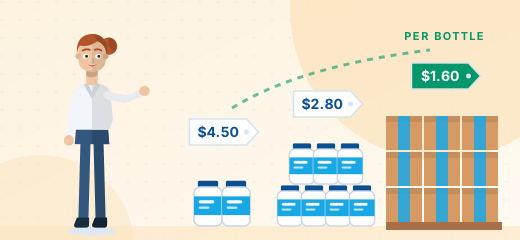
Capsules or tablets: which one costs more to make? Per bottle, tablets usually cost less. There’s no capsule shell, and the press runs fast. So tablets win? At volume, yes. But tablets need tooling, binders, and bigger minimums. And capsules? Less setup and lower minimums, so for a first run they’re often cheaper. And faster: four to six weeks, versus six to eight or more for tablets. Not sure which one is right for you? Get free quotes for both at SupplementQuotes.com.
Tablets are usually cheaper per unit at volume because there is no capsule shell and compression is fast, but they need tooling, extra excipients and higher minimums. Capsules cost more per unit but need less setup and lower minimums, so they are often the cheaper choice for a first run. Capsules typically take 4 to 6 weeks to produce; tablets 6 to 8 weeks or more.
If you are developing a supplement product, one of the most important decisions you’ll make is choosing the right format.
The supplement industry offers a wide range of product formats, from newer options like gummies and powders to more traditional forms like capsules and tablets. While both are widely used and familiar to consumers, they differ in meaningful ways when it comes to manufacturing cost, production complexity, and overall positioning.
Understanding these differences early can help you avoid costly mistakes and choose the format that best aligns with your product goals. In this guide, we break down the real cost differences between capsules and tablets in 2026, so you can make a confident, informed decision.
Understanding the Manufacturing Differences
Capsules and tablets are produced using very different processes, and those differences directly impact cost, lead time, and flexibility.
Capsules are filled with powders or granules after the formula is blended. Depending on the product, this can range from a simple combination of ingredients to a more complex formulation with multiple active components. Once prepared, the material is filled into capsules using encapsulation machines.
This process is relatively straightforward and typically requires less setup. As a result, capsules tend to offer faster turnaround times and greater flexibility, particularly for brands that are still refining their formulation or launching for the first time.
Tablets, by contrast, are produced by compressing blended powder into a solid form. This process often requires additional excipients, including binders and flow agents, to ensure the tablet holds its shape and performs as intended.
Tablet production also involves more setup, including tooling, compression calibration, and potential formulation adjustments. These added steps can increase both complexity and the time required before full production begins.
Which costs less to manufacture, capsules or tablets?
Cost differences between capsules and tablets are not always obvious at first, but they become more significant depending on volume and formulation.
Capsules generally carry a higher per-unit cost due to the capsule shell. However, they often require lower minimum order quantities and less upfront setup, which can make them more cost-effective for smaller runs. For brands entering the market or testing a new product, this lower barrier to entry can be a major advantage.
Tablets, on the other hand, are typically more efficient at scale. Without the added cost of a capsule shell, the per-unit price can decrease significantly as production volume increases.
That efficiency comes with trade-offs. Tablet manufacturing usually requires higher minimum order quantities and more upfront investment in setup, making it better suited for brands with established demand or larger production goals.
How long do capsules and tablets take to manufacture?
| Format | Typical timeline | Why |
|---|---|---|
| Capsules | ~4–6 weeks | Simpler setup — faster from formulation to finished product |
| Tablets | ~6–8+ weeks | Tooling, compression calibration, and testing extend the schedule |
For brands working under tight timelines or looking to launch quickly, this difference can play a significant role.
How do you choose between capsules and tablets?
There is no single answer that applies to every product. Capsules are often the preferred choice when speed, flexibility, and lower minimums are priorities — particularly well-suited for new product launches, complex formulations, or brands that want a more premium presentation. Tablets tend to make more sense when cost efficiency at scale is the primary objective; for high-volume products with stable formulations, tablets can offer meaningful savings over time.
When making your decision, it is important to consider:
- Your budget
- Your brand positioning
- Your ingredient profile and formulation goals
- Your expected order volume
Aligning these factors will help ensure that your chosen format supports both your product strategy and your long-term growth.
Compare Real Capsule vs Tablet Quotes
The most effective way to determine which format is right for your product is to compare real manufacturing quotes. SupplementQuotes® allows you to submit your formula and receive multiple quotes from verified manufacturers, making it easier to evaluate pricing, lead times, and production options side by side.
By comparing real data instead of relying on assumptions, you can make a more confident and cost-effective decision.
Submit your product once and receive competing quotes from verified supplement manufacturers, free for brands and NDA-protected.