How Much Does It Cost to Manufacture Supplements?
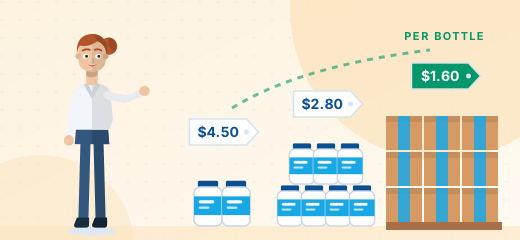
For a standard capsule or tablet product, most brands land between $2 and $8 per bottle at typical minimum orders of 1,000 to 5,000 units; gummies and softgels run higher. Raw materials are usually 40 to 60% of that figure, with manufacturing, packaging, testing and overhead making up the rest. The biggest lever on price is order size, because testing and setup costs are fixed and get spread across every bottle.
One of the first questions new brand owners ask is: “How much will it cost to manufacture my supplement?” The answer depends on several key factors — and understanding them can save you thousands of dollars. Let’s break it down.
Ingredient Costs
Ingredients are usually the largest expense. Costs vary depending on the type of ingredient (basic vitamin vs specialty compound), dosage per serving, purity level, and global supply conditions.
- Basic vitamins → lower cost per kg
- Amino acids → moderate
- Specialty or patented ingredients → significantly higher
If your formula requires high milligram dosages, your raw material costs increase quickly.
Capsule vs Tablet vs Powder
Different delivery forms have different costs:
| Format | Cost profile |
|---|---|
| Capsules | Most common · moderate production cost · clean-label friendly · vegetarian capsules cost slightly more |
| Tablets | Lower material cost · higher tooling and compression requirements |
| Powders | No capsule shell · larger serving size · often lower manufacturing cost per serving |
Choosing the right format affects your final price significantly.
Minimum Order Quantities (MOQ)
Most manufacturers require 100,000–200,000 capsules, 1,000+ bottles, and bulk ingredient purchasing. Smaller runs increase cost per bottle because testing costs remain fixed, setup costs remain fixed, and raw material minimums still apply.
Testing & Compliance Costs
Every batch typically requires identity testing, microbial testing, heavy metal screening, and label compliance review. Testing can range from a few hundred to several thousand dollars depending on complexity — and this cost is distributed across your total bottle count.
Packaging Costs
Packaging includes bottles, lids, labels, shrink bands, and cartons. A basic 120cc bottle + lid + label can range from $0.80–$1.50+, and premium packaging increases cost significantly. Brand positioning affects packaging choices.
Manufacturing & Labor
Manufacturing includes blending, encapsulation or tableting, bottling, label application, and quality control. This cost is typically calculated per bottle or per capsule.
Example Cost Breakdown (Capsule Product)
| Category | Estimated contribution |
|---|---|
| Raw materials | 40–60% |
| Manufacturing | 10–20% |
| Packaging | 15–25% |
| Testing | 5–10% |
| Overhead | 5–10% |
Your exact cost depends heavily on formula and volume.
What Is the Typical Cost Per Bottle?
For a standard 100-capsule supplement, small runs mean a higher cost per bottle and larger runs mean a lower cost per bottle. The difference between 500 bottles and 2,000 bottles can dramatically change your margins — scaling production almost always improves profitability.
How to Lower Manufacturing Costs
- Increase order size when possible
- Adjust ingredient dosages strategically
- Avoid unnecessary premium packaging
- Compare multiple manufacturer quotes
- Plan long-term scaling from day one
Getting multiple quotes gives you leverage and transparency.
Why Getting Multiple Quotes Matters
Many new brands accept the first quote they receive. That’s risky. Manufacturing costs can vary significantly depending on facility efficiency, supplier relationships, equipment capabilities, and batch size flexibility. Comparing options ensures competitive pricing.
Final Thoughts
Manufacturing supplements isn’t just about finding the lowest price. It’s about understanding cost drivers, planning scalable growth, and choosing the right production partner. The more informed you are, the better your margins will be.
Submit your product once and receive competing quotes from verified supplement manufacturers, free for brands and NDA-protected.